2026年3月31日
How to Find Your Face Shape
The Complete Guide to Understanding Your Features and Finding Your Perfect Look Why Face Shape Matters Have you ever wondered why certain hairstyles look amazing on your friend ...
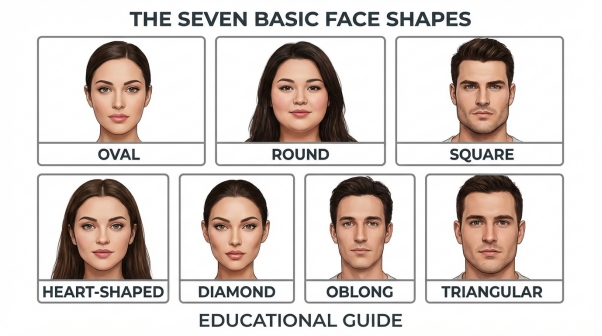
The Complete Guide to Understanding Your Features and Finding Your Perfect Look**
Why Face Shape Matters
Have you ever wondered why certain hairstyles look amazing on your friend but fall flat on you? Or why that pair of glasses that looked so chic in the store window seems all wrong when you try them on? The answer often lies in something many of us overlook: our face shape. Understanding your face shape is like having a personal roadmap to your best features, guiding you toward the most flattering hairstyles, frames, and makeup techniques that work specifically for you.
The truth is, most people go through life without ever really considering the unique geometry of their face. They might notice that they have high cheekbones or a strong jawline, but connecting these individual features to a broader understanding of face shape? That's where things get interesting. Once you understand your face shape, you unlock a toolkit that helps you make better decisions about everything from your haircut to your contouring technique.
Think about it this way: your face shape is the canvas upon which everything else is built. When stylists and makeup artists work with celebrities, one of the first things they assess is face shape. It's not about changing who you are—it's about enhancing your natural beauty in the most harmonious way possible. The good news? Determining your face shape is easier than you might think, and you don't need expensive consultations or fancy equipment to figure it out.
The Seven Basic Face Shapes
Before we dive into how to determine your face shape, let's get familiar with the seven primary face shapes that beauty experts recognize. Remember, these categories are meant to be helpful guidelines, not rigid boxes. Many people have faces that blend characteristics from multiple shapes, and that's completely normal. The goal is to identify which shape most closely matches your features so you can make informed styling choices.
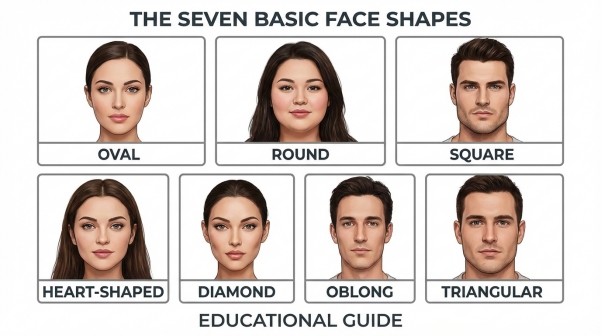
Figure 1: The seven basic face shapes illustrated for easy identification
Oval Face Shape
Often considered the most versatile and balanced of all face shapes, the oval face is characterized by being longer than it is wide, with a forehead that's slightly wider than the chin. The face gently narrows from the cheeks to the jaw, creating an egg-like silhouette. Celebrities like Beyoncé, Emma Watson, and George Clooney have classic oval faces. If you have an oval face shape, consider yourself lucky—almost any hairstyle, glasses frame, or makeup technique will work beautifully on you. The key is simply not to overwhelm your balanced features with anything too extreme.
Round Face Shape
A round face is approximately as wide as it is long, with soft, curved lines and no sharp angles. The cheeks are typically the widest part of the face, and the jaw is rounded rather than angular. Think of celebrities like Selena Gomez, Ginnifer Goodwin, or Leonardo DiCaprio in his younger years. Round faces have a naturally youthful, approachable quality. The styling goal for round faces is typically to add some definition and create the illusion of length, which can be achieved through strategic hairstyling, angular frames, and contouring techniques.
Square Face Shape
Square faces are characterized by a strong, angular jawline that's roughly the same width as the forehead. The sides of the face are relatively straight, and the face is about as long as it is wide. This shape conveys strength and confidence—just look at Angelina Jolie, Brad Pitt, or Olivia Wilde. Square faces are striking and photogenic, with naturally defined bone structure that many people try to create with contouring. The styling approach for square faces often involves softening the angles slightly while celebrating the strong jawline that makes this shape so distinctive.
Heart Face Shape
Heart-shaped faces are wider at the forehead and cheekbones, tapering down to a narrow, often pointed chin. This creates an inverted triangle or heart shape. The forehead may be high, and there's often a widow's peak hairline. Reese Witherspoon, Scarlett Johansson, and Ryan Reynolds are classic examples. Heart-shaped faces have a naturally romantic, feminine quality (though they look equally striking on men). The styling goal is usually to balance the wider upper face with the narrower chin, either by adding volume at the jawline or keeping the forehead area more streamlined.
Oblong Face Shape
Sometimes called rectangular, oblong faces are notably longer than they are wide, with a fairly consistent width from forehead to jaw. The cheekbones aren't significantly wider than the forehead or jawline. Sarah Jessica Parker, Idris Elba, and Ben Affleck have oblong face shapes. This elongated shape can look elegant and sophisticated. The styling objective is typically to create the illusion of width and break up the vertical line of the face, which can be accomplished through side-swept hairstyles, wider frames, and horizontal makeup techniques.
Diamond Face Shape
Diamond faces are relatively rare and quite distinctive. They feature a narrow forehead and jawline with dramatically wide, high cheekbones. The face is widest at the cheekbones, creating a diamond shape when outlined. Jennifer Aniston, Megan Fox, and Tyra Banks are prime examples. Diamond faces have an exotic, striking quality thanks to those prominent cheekbones. Styling for diamond shapes often focuses on balancing the cheekbones with the narrower forehead and chin, either by adding fullness at the temples or keeping volume minimal at the cheek area.
Triangle (Pear) Face Shape
Triangle or pear-shaped faces are wider at the jaw and narrow at the forehead—the opposite of heart-shaped faces. This creates a solid, grounded appearance with a strong lower face. Kelly Osbourne and Minnie Driver have triangle face shapes. While less common than other shapes, triangle faces have a unique, memorable quality. The styling goal is typically to add volume and width at the forehead and temples to create better balance with the wider jaw.
How to Determine Your Face Shape: A Step-by-Step Guide
Now that you understand the different face shapes, it's time to determine which one best describes your features. Don't worry—this doesn't require any special equipment or expertise. All you need is a mirror, some way to pull your hair back, and about five minutes of your time. The key is to look at your face objectively, focusing on proportions and angles rather than individual features you might be self-conscious about.
Step 1: Prepare Your Canvas
Start by pulling your hair completely away from your face. Use a headband, hair tie, or clips to secure every strand—this is crucial because hair can dramatically change how we perceive face shape. If you have bangs, pin them back. If you typically wear glasses, take them off for this exercise. You want to see your face in its purest form, without any distractions or softening elements. Stand in front of a well-lit mirror, ideally in natural daylight if possible. Good lighting will help you see the true angles and proportions of your face.
Step 2: Take a Selfie
While you can certainly analyze your face directly in the mirror, taking a straight-on photo makes the process much easier. Hold your camera at eye level (not above or below, which distorts proportions) and snap a clear, well-lit photo of your face. Having this image allows you to trace your face shape and measure proportions more accurately. If you have a photo-editing app, you can even draw lines directly on the image to visualize the shape. This step might seem unnecessary, but it's incredibly helpful for seeing your face objectively—we're all so used to our own features that it can be hard to assess them impartially.
Step 3: Measure Your Face
For a more precise determination, you can take actual measurements of your face. You'll need a flexible tape measure or a ruler and a bit of patience. Measure the following four key areas and jot down the numbers: First, measure your face length from the center of your hairline (or where it would be if you have a receding hairline) to the tip of your chin. Second, measure your forehead width at its widest point—typically about halfway between your eyebrows and hairline. Third, measure your cheekbone width from the outer corner of one eye to the outer corner of the other, going across the cheekbones. Finally, measure your jawline width from the widest point on one side of your jaw to the corresponding point on the other side. These measurements will give you concrete data to work with when determining your face shape.
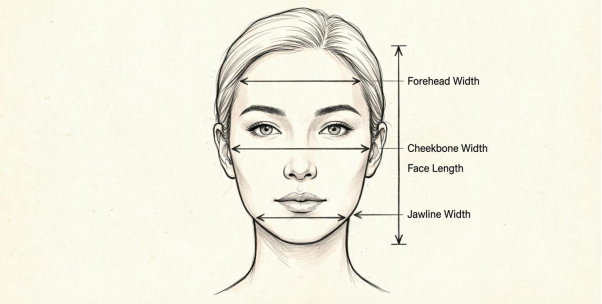
Figure 2: Key measurements to determine your face shape accurately
Step 4: Analyze Your Proportions
Now comes the detective work. Look at your measurements (or your photo) and ask yourself some key questions. Is your face longer than it is wide, or are the proportions roughly equal? Which is the widest part of your face—the forehead, cheekbones, or jawline? Is your jawline angular, rounded, or somewhere in between? Does your face narrow significantly from cheekbones to chin, or does it maintain a consistent width? Compare your answers to the descriptions of each face shape provided earlier. Most people can narrow it down to one or two possibilities fairly quickly.
Quick Reference Guide
If you're still uncertain, use this quick decision tree to help identify your face shape:
If your face is longer than wide and your forehead is wider than your jaw → OVAL
If your face is as wide as it is long, with rounded features → ROUND
If your face is as wide as it is long, with a strong angular jaw → SQUARE
If your forehead is wide and your chin is narrow/pointed → HEART
If your face is notably longer than wide, with similar width throughout → OBLONG
If your cheekbones are dramatically wider than forehead and jaw → DIAMOND
If your jaw is wider than your forehead and cheekbones → TRIANGLE/PEAR
Styling Tips for Your Face Shape
Now for the fun part—putting your face shape knowledge into action. The principle behind all face-shape styling is simple: balance. If your face has sharp angles, you can either embrace them or soften them with rounded elements. If your face is predominantly curved, angular accessories and styles can add definition. If your face is already balanced (hello, oval faces), you have the freedom to experiment. Here's a detailed breakdown of what works best for each face shape:
Best Hairstyles by Face Shape
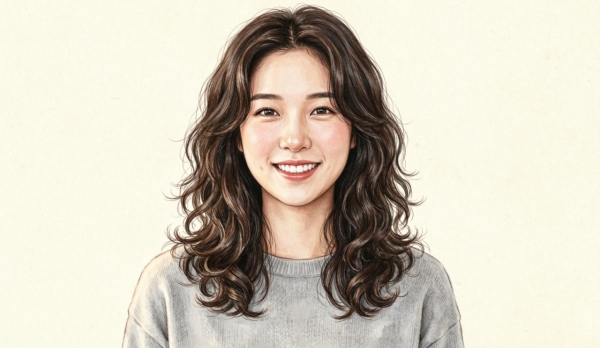
Figure 3: Layered hairstyles work beautifully to frame and enhance your natural face shape
Your hairstyle is perhaps the most powerful tool for enhancing your face shape. The right cut can balance proportions, highlight your best features, and even create optical illusions that change how your face appears.
Oval Faces
Congratulations—almost any hairstyle works for you! Short pixies, long layers, blunt bobs, side-swept bangs, center parts—you can pull them all off. The only caution is to avoid styles that add too much height on top, which can elongate your already-proportional face. Long layers that frame the face are particularly flattering, as they emphasize your balanced features.
Round Faces
The goal is to create length and angles. Long layers that fall below the chin work beautifully, as do side-swept bangs that create diagonal lines across the forehead. Avoid chin-length bobs, which can make the face appear rounder. Height at the crown can help elongate the face—think volume on top, sleek on the sides. Deep side parts create asymmetry that breaks up the roundness.
Square Faces
Soft, layered styles are your best friend. Long layers, waves, and curls all help soften the angular jawline. Side-swept bangs create a diagonal line that contrasts with your strong features. Layers that start at the jawline help blur its sharpness. Shoulder-length cuts with soft waves are particularly flattering.
Heart Faces
Balance the wider upper face with volume at the chin level. Chin-length bobs, long layers that flip outward at the ends, and side-swept bangs all work well. A side part helps de-emphasize a wider forehead. Long, wavy styles that add fullness at the jawline create beautiful balance.
Oblong Faces
Add width and break up the vertical line of your face. Full bangs can work beautifully, as they visually shorten a long face. Waves and curls add horizontal volume. Avoid long, straight hair without layers, which can elongate the face further. Volume at the sides is key—keep things sleek on top but add fullness around your cheeks and jaw.
Diamond Faces
Your prominent cheekbones are an asset—styles should frame them rather than compete with them. Side-swept bangs help narrow the forehead area, while chin-length or longer styles add width at the jaw. Tucked-behind-the-ear styles showcase those gorgeous cheekbones. A deep side part with waves is a classic, flattering choice.
Triangle Faces
Add volume and width at the forehead and temples while keeping the jaw area more streamlined. Side-swept bangs and volume at the crown help broaden the upper face. Layers that start around eye level create fullness where you need it. A deep side part with volume at the roots is particularly effective.
Choosing the Perfect Glasses
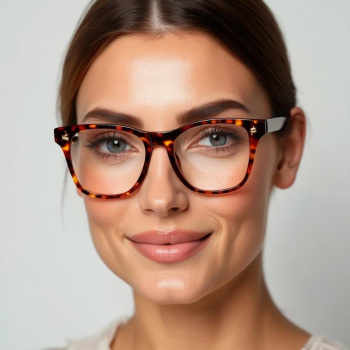
Figure 4: The right frames can enhance your features and express your personal style
Glasses have evolved from purely functional items to full-fledged fashion accessories. The right frames can enhance your features and express your personality, while the wrong ones can throw off your entire look. Here's how to choose frames that flatter your face shape:
Oval faces: Lucky you—most frame shapes work well. Experiment with geometric shapes, aviators, or classic rectangular frames. Just avoid anything too oversized that overwhelms your balanced features.
Round faces: Angular, rectangular frames add definition and create the illusion of length. Avoid round frames, which echo the face's curves. Frames with brow bars or strong horizontal lines are particularly flattering.
Square faces: Round or oval frames soften angular features. Aviators and cat-eye styles also work well. Avoid boxy, geometric frames that emphasize the square shape.
Heart faces: Bottom-heavy frames balance the wider forehead. Look for styles that are wider at the bottom or have decorative lower rims.
Oblong faces: Wide frames with decorative temples add width and break up the length. Avoid narrow frames that emphasize the face's length.
Diamond faces: Oval and cat-eye frames are particularly flattering, as they highlight the eyes and balance the cheekbones.
Triangle faces: Top-heavy frames, like cat-eyes or brow-line styles, add width at the forehead. Decorative temples draw the eye upward.
Makeup Techniques by Face Shape
Contouring and highlighting are powerful tools for subtly altering how light interacts with your face, creating shadows and highlights that can change perceived proportions. The basic principle: darker shades recede, while lighter shades bring forward. For oval faces, minimal contouring is needed—a bit of bronzer along the hairline and under the cheekbones adds subtle definition. Round faces benefit from contouring the sides of the forehead, under the cheekbones, and along the jawline to create angles and length. Square faces should focus on softening the angles—contour the corners of the forehead and the jawline, with highlighter on the center of the forehead and chin. Heart faces look best with contouring at the temples and sides of the forehead to narrow this area, plus a touch of highlighter on the chin to broaden it.
Common Mistakes to Avoid
Even with the best information, it's easy to make mistakes when analyzing your face shape or applying styling advice. Here are some common pitfalls to watch out for:
Over-analyzing your features: Remember, face shapes are guidelines, not strict rules. Many people have faces that combine elements of multiple shapes.
Trying to "fix" your face shape: Your face shape isn't something that needs fixing—it's something to work with. The goal is to enhance your natural features.
Ignoring personal style: While face shape guidelines are helpful, they shouldn't override your personal preferences. Confidence shines through regardless of whether a style is "optimal" for your face shape.
Forgetting about proportions: Face shape is just one factor in your overall look. Your features' proportions—eye spacing, nose size, lip fullness—also play important roles.
Not considering your whole head: Hair texture, density, and growth patterns all affect how hairstyles look on you. A style that's theoretically perfect for your face shape might not work if it fights against your hair's natural tendencies.
Final Thoughts
Understanding your face shape is a journey, not a destination. As we age, our faces change—weight fluctuations, collagen loss, and even dental work can subtly alter our face shape over time. The key is to periodically reassess and adjust your styling choices accordingly. Most importantly, remember that face shape is just one aspect of your unique beauty. Your features—your eyes, your smile, your expressions—are what truly define you.
The best style choices are the ones that make you feel confident and authentic. Use these guidelines as a starting point, but don't be afraid to break the rules. Some of the most iconic looks in history came from people who defied conventional face shape wisdom. After all, beauty isn't about fitting into categories—it's about celebrating what makes you uniquely you.
So go ahead—measure your face, identify your shape, and have fun experimenting with styles that work with your features. But most of all, enjoy the process of getting to know your face better. Understanding the geometry of your features is ultimately an act of self-appreciation, a way of honoring the unique canvas you were given.